
CrossCountry trains, routes and tickets
CrossCountry connects cities across Britain through a network centred on Birmingham. It is especially useful for journeys that avoid changing in London, linking parts of Scotland, northern England, the Midlands, Wales and the South West. Its regional services also connect the East Midlands and East Anglia with Birmingham and beyond.
Reviewed 6 November 2026.

About the operator
The current CrossCountry brand describes a network of through routes across several regions rather than a service radiating from one London terminal. That network role explains why the operator is often an option for journeys between two regional cities even when neither is near Birmingham.
CrossCountry remains listed as a current train company by National Rail. CrossCountry remains the name to look for in the timetable while the wider railway undergoes ownership reform. Check the operator shown against the specific train when planning a journey.
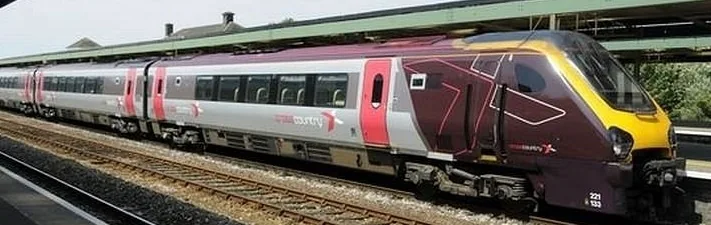
Routes and principal stations
North East, Yorkshire and the South West
The main cross-country axis links places such as Edinburgh, Newcastle, Leeds or Sheffield with Birmingham and Bristol, with some services continuing farther south-west. Individual trains follow different branches and terminate at different stations, so check the complete itinerary.
Manchester and the south coast
Other services connect Manchester and the Midlands with places such as Oxford, Reading and Southampton. These provide useful alternatives to a London transfer, although the most suitable journey still depends on the date, calling pattern and any engineering diversions.
Regional connections
CrossCountry’s regional routes include the Cardiff–Birmingham–Nottingham and Birmingham–Leicester–Peterborough–Cambridge corridors. They connect a different set of towns from the longer-distance main axis and are useful for travel across the Midlands and towards East Anglia.
Planning your journey
When comparing two regional cities, search the end-to-end journey before assuming a change in London is necessary. A through train can simplify luggage handling, while an alternative with one change may still be better for the required arrival time.
Birmingham New Street is a major interchange. Build in time to identify the platform and navigate the station, particularly when unfamiliar with it. The destination on the train may be much farther away than your own stop, so confirm the calling points.
Review seat reservations and luggage arrangements for longer journeys. Check both the operator’s service updates and any affected connecting train before travel; work far away on a long route can change your local part of the service.
Tickets and journey choices
A route being shown on CrossCountry’s map does not mean that every ticket between its stations is valid on every service. Read operator and route restrictions, especially when comparing an Advance fare with a flexible ticket. If disruption changes the plan, follow the published ticket-acceptance instructions before boarding another operator’s train.
Accessibility and assistance
CrossCountry provides booked and unbooked passenger assistance. Explain all changes of train when requesting help, including the station where responsibility passes to another operator. Check wheelchair spaces, boarding arrangements and replacement-road-transport options for the selected service rather than relying on a general network map.
Sources and further information
Use the current operator's information to check the latest timetable, disruption and assistance arrangements for your travel date.