
Southeastern trains, routes and tickets
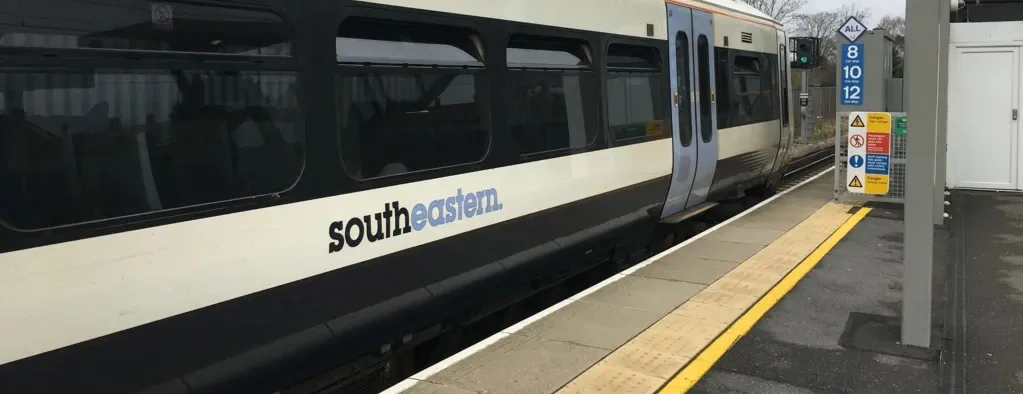
Southeastern runs suburban, main-line and domestic high-speed trains between London, Kent and parts of East Sussex. Its London terminals include Charing Cross, Cannon Street, Victoria and St Pancras International. The right terminal and route depend on the destination and ticket, particularly when comparing the conventional railway with the High Speed 1 route.
Reviewed 6 November 2026.

About the operator
Southeastern remains a current operating brand and is listed in National Rail’s train-company directory. The name covers several different types of service rather than a single London-to-coast route.
Domestic high-speed trains are part of Southeastern’s network. They are separate from Eurostar international services, even though both use St Pancras International and part of the high-speed infrastructure. An international station name does not establish that an international train calls there.
Routes and principal stations
London suburban and main-line routes
Routes from the conventional London terminals serve south-east London and towns across Kent. London Bridge is an important interchange, but not every service uses the same London terminal or calls at every intermediate station.
Domestic high speed
Southeastern’s high-speed route links St Pancras International with Stratford International, Ebbsfleet International and Ashford International, with trains continuing to destinations around Kent. Check the dated timetable for the train’s onward route and stops.
Kent coast and East Sussex
The wider network serves Canterbury, the Medway towns, Thanet, Dover and Hastings. Some places have more than one station on different routes. Choose the station nearest the destination and compare the available London approaches.
Planning your journey
Compare both arrival terminal and total door-to-door journey when considering a high-speed option. A quicker rail leg may still need a different London transfer, while a conventional service may be more convenient for an address near Charing Cross, Cannon Street or Victoria.
Stratford International and Stratford (London) are separate stations. Read interchange instructions carefully when combining Southeastern with the Elizabeth line, London Overground, Underground or other rail services.
At Canterbury, retain the West or East suffix in the search and ticket. The two stations serve different routes. Similarly, confirm the exact coastal station for an attraction rather than relying on the town name alone.
Check live departures and planned engineering work for the date of travel. Weekend changes can alter the London terminal, route or replacement transport, so an old route description should not replace the current itinerary.
Tickets and journey choices
A journey using the HS1 high-speed section needs the appropriate route validity. Southeastern explains that travelling on a Javelin train elsewhere in Kent does not itself require a high-speed allowance if the HS1 section is not used. Check the ticket and complete itinerary before boarding, especially when connecting from another operator or using a London Terminals ticket.
Accessibility and assistance
Southeastern publishes station access information and an Accessible Travel Policy. Check both the station entrance and the platform for the intended route, and ask for assistance with boarding or changing trains where useful. Domestic high-speed and conventional services may have different boarding arrangements, so identify the selected train when planning support.
Sources and further information
Use the current operator's information to check the latest timetable, disruption and assistance arrangements for your travel date.