
Greater Anglia trains, routes and tickets
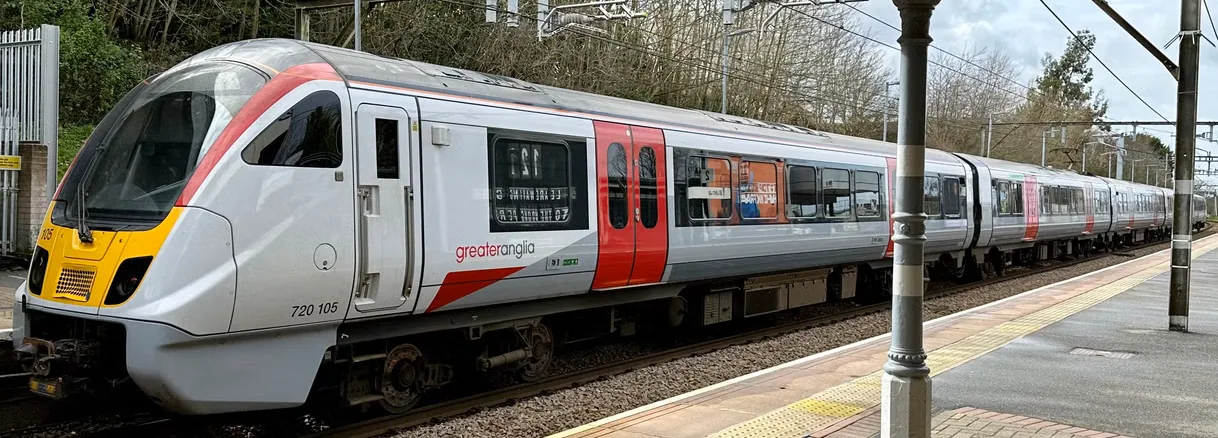
Greater Anglia serves East Anglia and routes from London Liverpool Street into Essex, Suffolk, Norfolk and Cambridgeshire. Its network includes intercity journeys to Norwich, commuter routes and rural branches. Stansted Express is a related airport brand, while the Elizabeth line provides a different service on part of the London–Shenfield corridor.
Reviewed 6 November 2026.

About the operator
Greater Anglia is the present passenger identity for a network that has carried several franchise names. Greater Anglia is the name shown for its current operating services. Earlier franchise names may still appear on old tickets, photographs and travel pages, but they describe previous operating periods.
The operator transferred into public ownership on 12 October 2025. Its company information now describes that public ownership. The transfer did not make every train in East Anglia a Greater Anglia service; other companies still appear on connecting and overlapping routes.
Routes and principal stations
London, Suffolk and Norwich
The main intercity corridor runs from Liverpool Street through Essex and Suffolk towards Norwich. Colchester and Ipswich are useful interchange points for branch and regional journeys, but the exact stopping pattern depends on the service.
Essex coast and local branches
The network includes routes to Southend Victoria, Clacton, Walton and Harwich, together with branches to smaller towns. Southend Victoria is distinct from c2c’s Southend Central. For a ferry journey, select the port station and check the onward operator’s check-in arrangements.
Cambridge and regional East Anglia
Greater Anglia also links London and Cambridge and operates regional services around Norfolk and Suffolk. Rural branches can have fewer late-evening alternatives, so check both the outward itinerary and the last useful return connection.
Planning your journey
Start with the precise station name. Liverpool Street’s mainline platforms and Elizabeth line platforms are different parts of a large interchange. Cambridge and Cambridge North serve different areas, while stations with similar coastal names may be on separate branches.
For a multi-leg rural journey, check connection time and the return service before buying an inflexible ticket. A route to a seaside town may involve changing at a junction station, and the last branch connection can be earlier than the last train from London.
Use the current network map alongside dated service information. During engineering work, replacement transport may use a stop outside the station; check the location and the time needed to reach it with luggage.
Tickets and journey choices
Compare operator and route restrictions, particularly on journeys where Greater Anglia, Great Northern, Thameslink or the Elizabeth line offer alternatives. Airport-branded services and local trains should not be assumed to have identical fare rules. Where using contactless or Oyster, verify coverage for the exact stations and payment method.
Accessibility and assistance
Greater Anglia supports the national Passenger Assist scheme and can coordinate help when changing to another operator. Check step-free access, boarding arrangements and wheelchair accommodation for each leg. Newer trains do not remove the need to check the station entrance, platform and any replacement-road-transport arrangement.
Sources and further information
Use the current operator's information to check the latest timetable, disruption and assistance arrangements for your travel date.